What Size Patio Heater Do I Need?
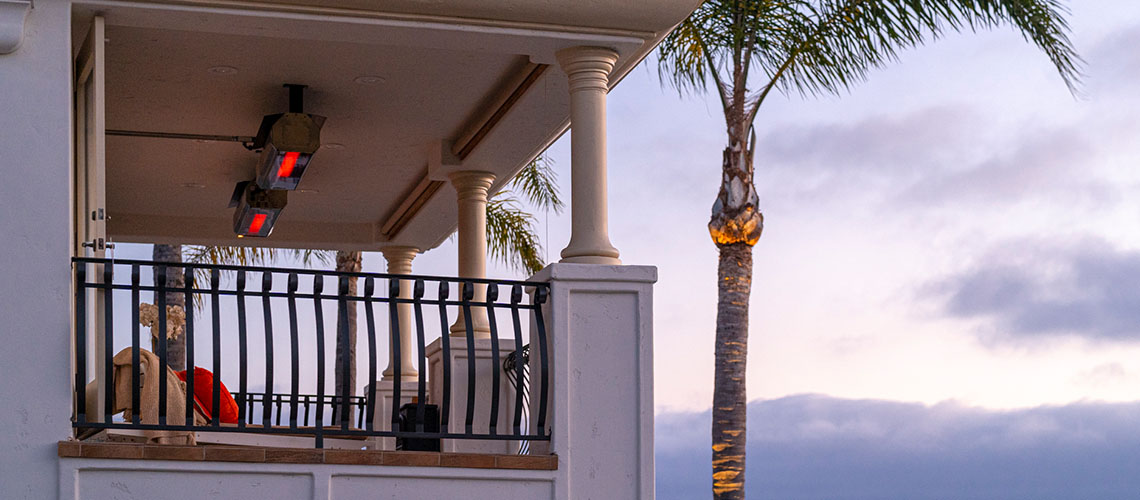
Okay, we admit that maybe we love spending outdoor time with our friends and family more than most people – but sitting together, sharing a meal, or talking about those weird people down the street always feels better outdoors. Sunshine, gentle breezes and the occasional whiff of dogwood trees help to make the occasion more memorable, and we can’t get enough of outdoor life.
As the sun makes its hasty retreat over the westward horizon, we begin to feel that nagging chill that beckons our guests to leave their outdoor oasis for the warmer confines of your home… but it doesn’t have to be that way. Adding patio heating to your outdoor space will keep your guest warm well into the night, letting the party continue as late as you dare to keep your eyes open.
Makes perfect sense… but how much patio heat do you need? Here at Canada Lighting Experts we’ve got a ridiculously large selection of patio heaters, ranging from tiny (tabletop propane heater with 10,000 BTUs) to humongous (ceiling mounted natural gas beast putting out 150,000 BTUs), so how do you know how much heat you need for your space?
Welp, you’re in luck. We have taken great care in selecting the absolute best patio comfort experts in the business, and we asked them for their take on how to accurately size patio heaters for a perfect fit. Some of their answers may surprise you…
How many BTUs does a patio heater have?
Firstly, let’s figure out what a BTU is. The British Thermal Unit (BTU) is the heat required to raise the temperature of one pound of water by one degree Fahrenheit… but what you need to know is that it’s a good way of comparing different heating systems.
We’d like you to remember that BTUs measure HEAT, which doesn’t necessarily work for all patio heaters. Some heaters don’t produce heat as you may think of it… in other words, they don’t warm the air around you. Electric radiant heaters use infrared heat (like the sun does) to warm the things in its path (people, furniture, the wandering cat…) and because of this, BTUs as a measuring system doesn’t make sense. Instead, let's look at how much space the heater covers…
| Heater Type |
Fuel Type |
Avg. BTU's |
Avg. Heating Area |
| Tabletop |
LP Gas (1 lb.) |
10,000 |
75 sq. ft. |
|
Electric |
|
12 sq. ft. |
| Freestanding |
LP Gas (20 lb.) |
40,000 |
100 sq. ft. |
|
Natural Gas |
53,000 |
130 sq. ft. |
|
Electric |
|
100 sq. ft. |
| Ceiling/Wall Mounted |
Natural Gas |
50,000 |
175 sq. ft. |
|
Electric |
|
120 sq. ft. |
When comparing different types of patio heaters, also take into account the heat spread… a “mushroom” heater (freestanding propane heater for instance) heats in all directions while a mounted heater only heats in one.
How many BTUs do I need to heat my patio?
Again, BTUs doesn’t really count when looking at electric patio heaters. For natural gas or propane heaters, a good rule of thumb is to take the area you would like to heat and use a basic formula. Let’s talk about that “area you’d like to heat” thing… Even though you may have a patio that is 40’ x 20’ in size, you don’t necessarily have to heat the entire space. If everyone gathers around a seating area or dining area, measure that space instead. Measure the area (length x width) of each space you’d like to heat or the entire patio if heating the whole thing is your goal.
Basic BTU Formula: Length x Width x 20 = BTUs needed
In our 40’ x 20’ patio example, to heat the entire patio it would take 40 x 20 x 20 = 16,000 so we would need 16,000 BTUs to heat the space.
Because heaters have a heat pattern (portable propane heaters typically heat in 360 degrees, where wall mounted gas or electric heaters project forward only), take into consideration the heat area covered by your preferred patio heater.
How many square feet does a patio heater cover?
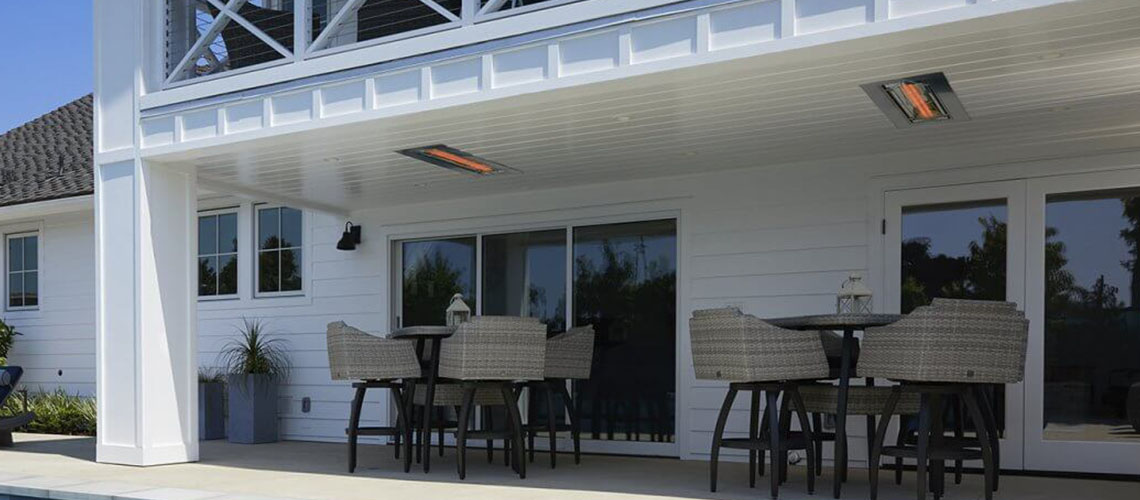
Although we’ve touched on this in the previous section (check out the chart above), it’s worth revisiting. Each heater has its own specs that will identify their heating profiles. Check both the amount of heat and the area that each patio heater you are considering will cover, and if you’re using multiple heaters (say 2-3 mushroom heaters to heat your entire patio) be sure to slightly overlap coverage to be sure your guests stay warm.
Something else to consider is wind. Patio heaters that heat the air (propane and natural gas systems) are susceptible to wind variations making your patio less than ideal. If your area is prone to wind, perhaps an electric patio heater (which uses radiant wave energy and is thus not susceptible to wind) would be best.
How much will it cost to heat my patio with patio heaters?
There are multiple costs associated with heating your patio with a patio heater… Purchasing the equipment (heaters, controllers, etc.), installing the heater (professionals are required for all but propane and plug-in electric heaters), operating costs and maintenance costs.
You can identify the equipment costs associated with the heater(s) you’ve selected on our site and if you’re unsure if you need a controller or other equipment, give our patio experts and call and we’ll happily work you through it. Generally electric heaters are cheaper than gas ones.
Heater installation varies across the country, but generally you can budget $500 for an electric (non-plug-in) heater installation and $750 for a gas heater installation.
Operating costs are interesting; Natural gas costs about $0.48 per hour to use, larger electric heaters cost about $0.60 per hour, and propane heaters cost about $1.70 per hour.
Maintenance costs are really only applicable to natural gas heaters, and they can average $0.25 - $0.75 per hour of use. If you need a heater repair, you can count on $250 plus the cost of any parts that need to be replaced.
Wrap-Up
By calculating the space, you want to heat (not your entire space, just heated space) you can come up with an estimate of the number of BTUs you would need to heat your patio (when using gas heaters). The safest way to estimate all heater types is to look at their coverage area and coverage pattern. It may be best to use multiple smaller heaters for you to get optimum coverage. When selecting your heating system, keep costs in mind (all costs: equipment, installation, operating costs and maintenance).
You’ve made the right decision in adding just the right heating solution to your outdoor living area, and we know it can be daunting to select what you *think* is the right one. No need to go it alone – we’ve got your back. Call the best patio experts in the business at (855) 234-7565 to speak with one of our outdoor consultants… we promise to treat you like family.