How to Heat Your Patio: A Guide to Heating Outdoor Spaces
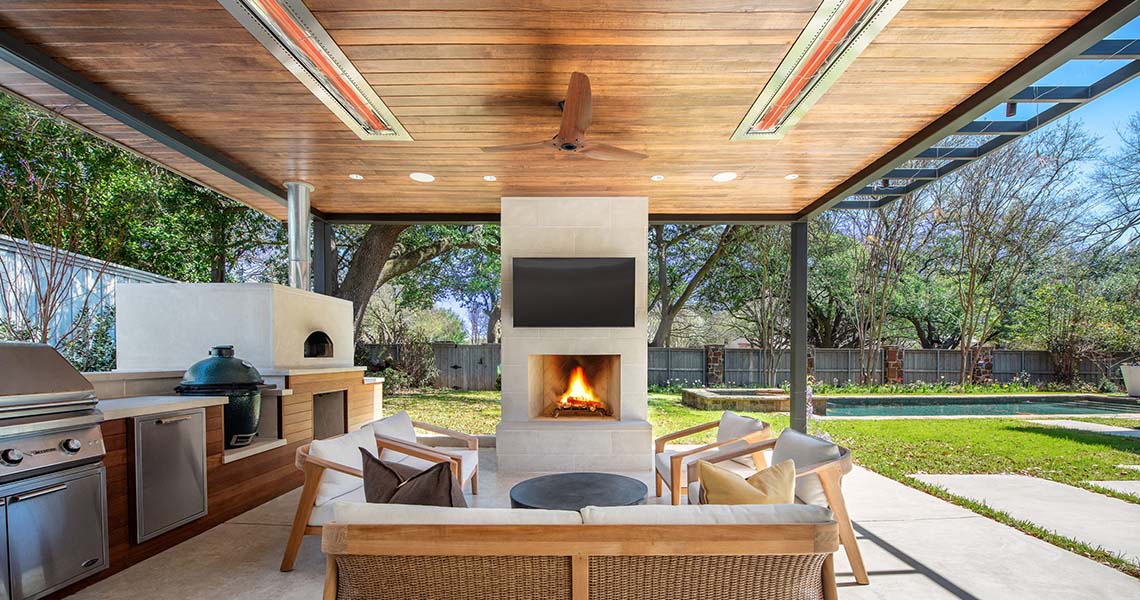
Whether you’re firmly clenched in Jack Frost’s grip, you’ve (finally!) reached early spring, or the latter part of fall is looming, there comes a part of the year in each of our lives where we find ourselves having to cut short our cherished outdoor living time due to the dreaded cold (or, as Mr. Daniels my Physics teacher used to say, “It’s not COLD, it’s absence of heat. There is no such thing as COLD!”). I don’t care what Mr. Daniels said, sometimes it gets so chilly outside that you’re almost forced to move your family and friends indoors – but you don’t have to…
The secret is to keep your family and friends warm in your outdoor oasis, which can be done by adding outdoor heaters or fire pits. Each of these solutions has valuable benefits (and a few pitfalls) and should be studied deeply before selecting the right one for your space.
Here at Patio Heat and Shade, we have gathered up the best patio comfort experts in the business and asked them the #1 question we get from our customers – How do you heat a patio? They chatted awhile and came up with this definitive guide to heating your patio (or deck, or pergola, or grassy knoll) chock full of ideas to point you toward the right solution for your outdoor living space. Let’s take a look…
What are your options for keeping your patio warm in the winter?
It’s a surprise to absolutely no one that what you need is a heat source. A single candle in the middle of a campfire circle? It’d work… but nobody is going to make any s’mores from that little heat.
To properly heat your patio, you’ll need either a high-quality patio heater (electric or gas) or a gorgeous fire pit… and lucky, we know all about all of them. Let’s talk through the specifics to see which may be perfect for your little outdoor getaway.
Patio Heaters
Electric Patio Heaters
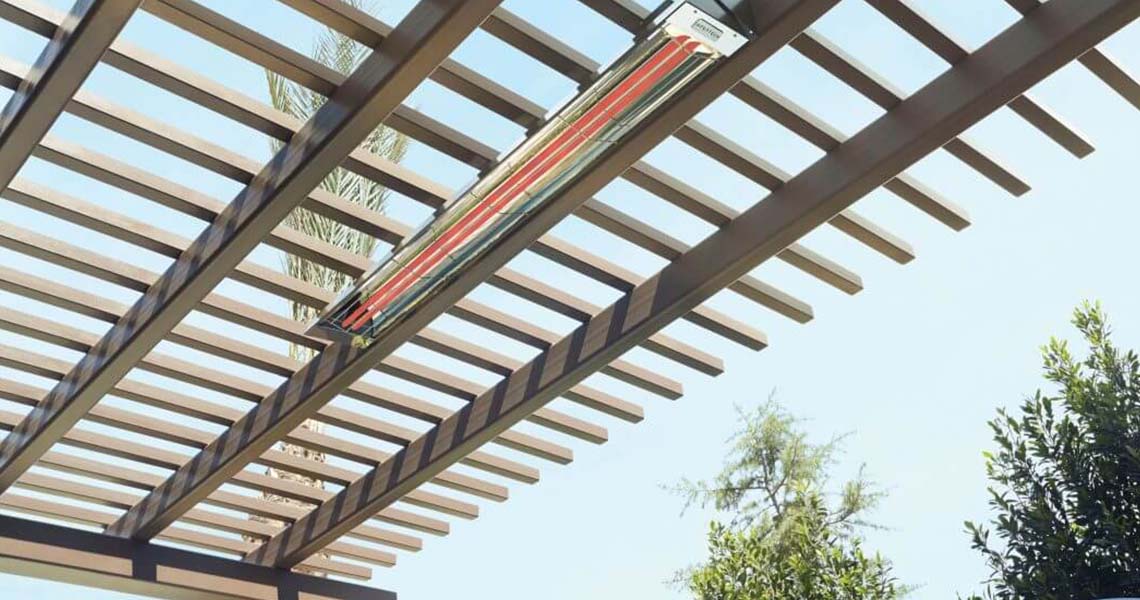
The best electric patio heaters use infrared technology to heat your outdoor space. Note that infrared heaters don’t heat the air, but they work more like the rays from the sun in that they heat the things that the rays touch (people, furniture, sparky the dog). These are the safest outdoor heaters (no open flames) and are the perfect choice for many homeowners and small businesses.
We heavily suggest mounted (ceiling- or wall-mounted varieties) electric patio heaters, as their output is generally higher than portable systems. Portable electric heaters, however, give you the ability to move your heat around your space as the mood strikes you to go from conversation area to outdoor dining table, to lounge to top off your night.
Pros
- Safest heating option – no open flames or potentially harmful gasses
- Less expensive up-front costs
- Low maintenance costs
- No ventilation required (in fact, they can be installed indoors)
- Less clearance required from ceilings and walls
- Not affected by wind
Cons
- Less heat output
- Higher operating costs
Gas Patio Heaters
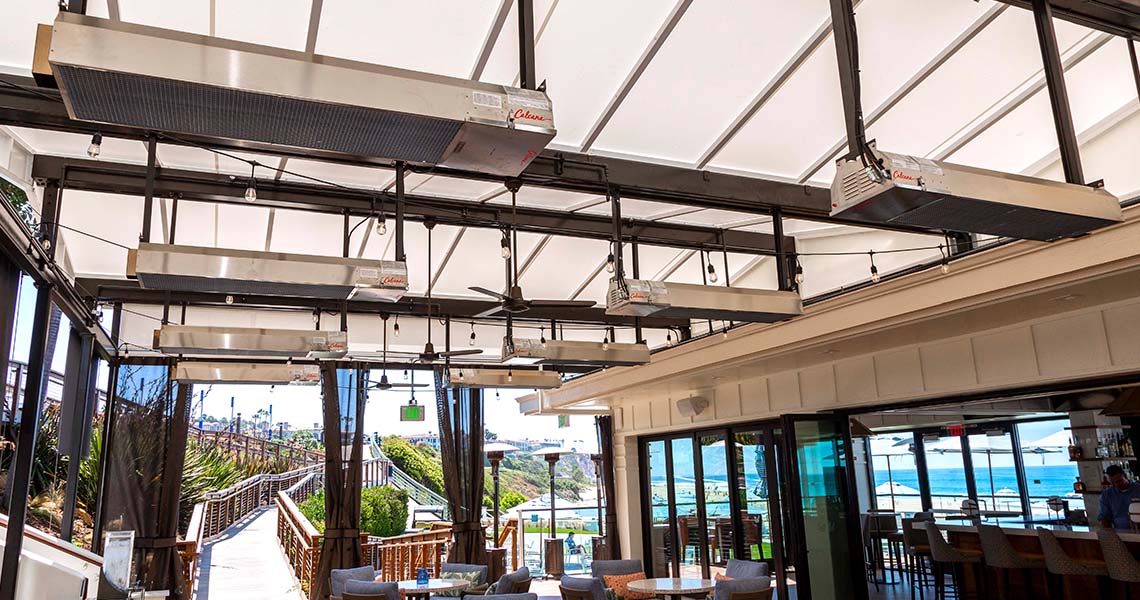
Modern gas patio heaters have evolved to be much more than a flame at the end of a controlled gas leak… they use either natural gas or liquid propane to create a focused, slow-release heat source capable of a large amount of thermal output. Today’s gas patio heaters are crafted to be both visually pleasing and highly efficient, just the ticket for many of our most discerning customers.
Pros
- Lower operating costs
- Heat Projection (wider heaters provide wider coverage)
Cons
- More expensive upfront costs
- Higher maintenance costs
- Ventilation required
- More clearance required
- Wind can seriously impact performance
Propane Patio Heaters
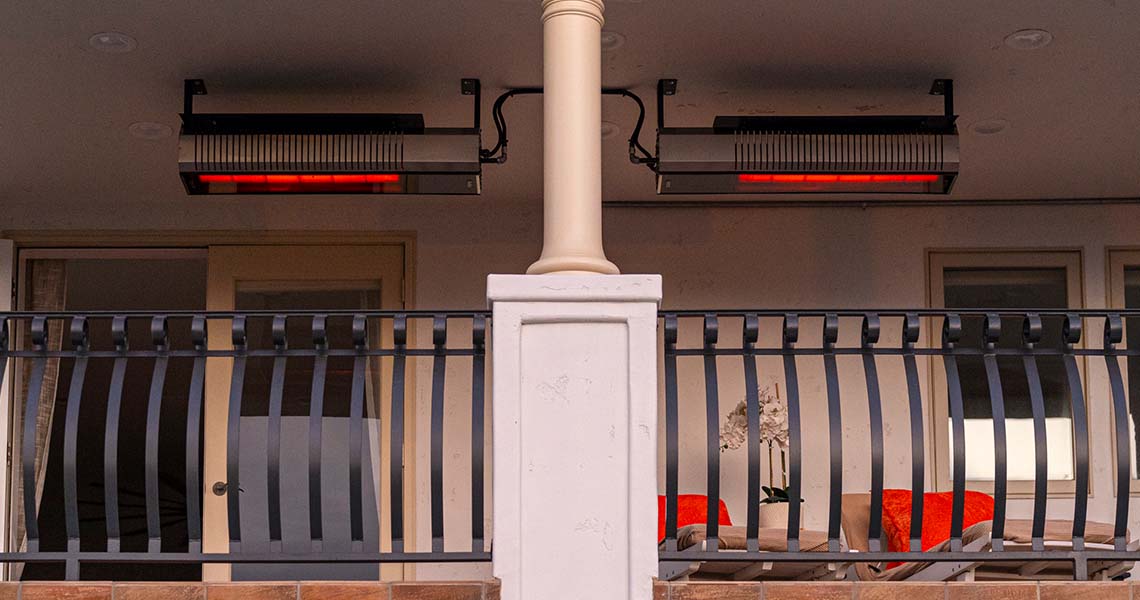
Propane patio heaters (also called Liquid Propane or LP patio heaters) generally use portable 20 lb. propane tanks to fuel the heater’s operations. Since the tank is directly tied to the heater (hidden inside the heater in most installations) these systems are generally portable and are a fantastic choice for when you want to heat different areas of your outdoor space.
Pros
- Portability – Use the same heater in multiple locations
- Storable – In the dog days of summer, roll it into the garage
- Inexpensive to purchase
- Get up to 10 hours of use from a single propane tank
Cons
- Overall expensive operating costs
- Must physically change out the tanks
- May tip over in windy conditions (better heaters have anti-tip safety features)
- Requires ventilation – Make sure manufacturer’s clearance recommendations are followed
When comparing patio heating systems, the cost of operating the systems over time should be heavily considered. If you use your patio heater infrequently, this may not be an issue for you. If you’re a beast for outdoor living (like we are), however, you can expect these figures to be a factor.
Propane Patio Heaters: $1.60/hour
240 Volt Electric Patio Heaters: $1.32 per hour
Natural Gas Patio Heaters: $0.48 per hour
Fire Pits
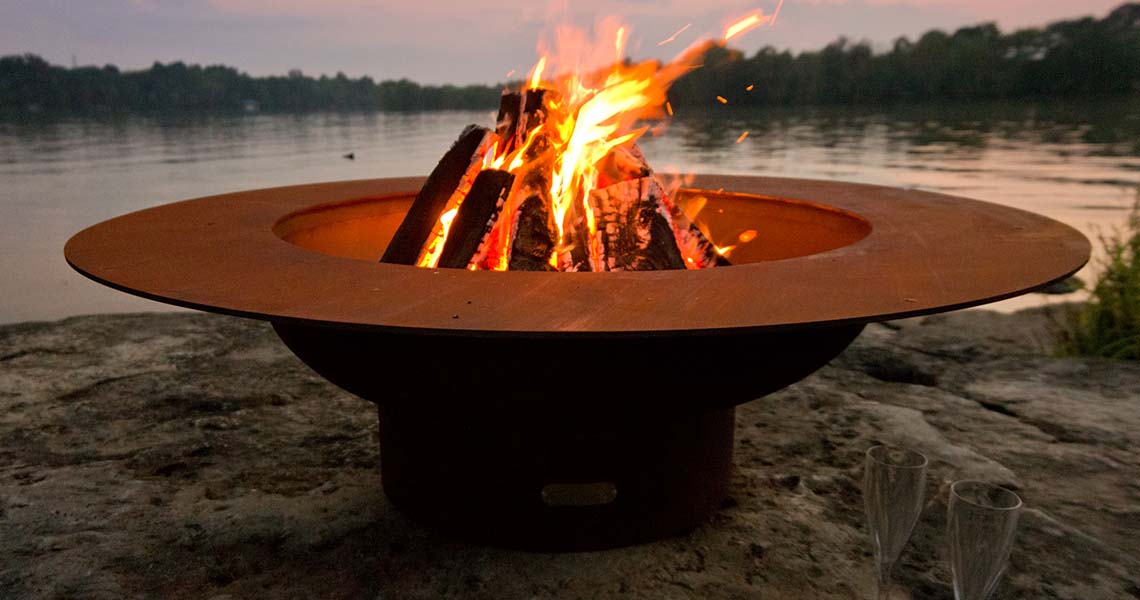
Since the beginning of time, humans have relied on fire for safety and security, cooking food, and to serve as the focal point for gazing both into one’s past and one’s future. We can’t think of a more romantic way to spend an evening than holding hands and pondering a shared future while flames flicker in the reflection of your partner’s eyes. All this, brought to you by fire.
Modern fire pits come in both the gas- and wood-burning varieties and can be central to creating a rustic getaway or a modern conversation area (depending on your choices). As always, make sure that all combustibles are away from your fire pit to keep your guests safe.
Gas fire pits
There’s a perfect way to make your romantic outdoor fire pit easier to live with – buy one that is fueled by either natural gas or propane. Without the need to stoke the fire, remove ashes or toss on another log your time can be dedicated to the flame-gazing we all know and love. Liquid propane fire pits hide the 20 lb. propane cylinder discretely within its outer walls, providing hours of heat without the unsightly cylinder crushing the vibe.
Natural gas fire pits provide much the same clean burning fire as a propane fire pit, but without the hassle of exchanging cylinders to keep the party going. On the downside, they have to be expertly installed (plumber required to handle the natural gas pipe fitting) and tend to be on the expensive side.
Wood burning fire pits
Now here’s a solution a proper neanderthal could appreciate… wood burning fire pits use the wonderful, crackly heat potential stored in wood to create an outdoor centerpiece that welcomes your guests like a moth to a flame. Okay, like people to a flame. In any case, the resplendent orange and yellow glow cast from a woodburning fireplace, complete with the crackles and hisses you only get from burning wood combine to embrace your guests with open arms. Of course, you’ll have to replenish the wood when the fire gets low, clean out the ashes frequently, and generally be wary of the immediate surroundings of the fireplace to keep everybody safe.
How to heat a covered patio
When ramping up to add heating to a covered patio, pay particular attention to the clearances required by the different heating solutions you are considering. Read and follow the manufacturer’s recommendations to keep everybody safe.
Our experts recommend taking a good long look at electric patio heaters as your best option for heating a covered patio – the lower clearance needs plus the resistance to the effects of wind make them ideal.
How much heat is needed for outdoor patios?
Welp, we’ll have to drag out our old friend math to help us with this one. To calculate the number of BTUs you’ll need to heat a space, calculate the area (length x width) and multiply by 20. So, a 30’ x 20’ space would need (30 x 20 = 600 x 20 = 12,000 btu required. Use this calculation, paired with the BTUs stated by the manufacturers, to come up with a solid estimate of how much heat is needed for your outdoor patio.
What is the best way to heat a patio?
There is no definitive answer to what the best way is to heat a patio. The right patio heater for your space is specific to you and your needs. Covered areas work best with electric patio heaters, while larger spaces could use multiple portable patio heaters to keep each of your outdoor areas toasty. For aesthetics, a fire pit is an amazing choice sure to gather your friends and family for hours on end. Just remember to review the operating costs of each option when you are weighing the pros and cons.
Here at Patio Heat and Shade, we’ve got so many options available to you that we are absolutely certain we have a perfect solution just waiting for you. Rely on our patio experts to review your needs, and comb through the myriad of options available on our site to find just the right one. That’s what you get at Patio Heat and Shade – expert help on a huge inventory of products at fantastic pricing. Give us a call and we’ll walk you through it every step of the way.