What is track lighting?
The term track lighting refers to a lighting system where multiple light fixtures are attached to a single, continuous track. The track is mounted to the ceiling or wall and supplies power to the track lighting fixtures attached to it. Tracks can be arranged in a variety of shapes to suit your space’s specific lighting needs, including around corners. You can also use different track shapes to add aesthetic appeal to your lighting design.
Track lighting is especially useful in areas where placing ceiling fixtures is difficult, such as in narrow hallways, sloped ceilings, or spaces where it is otherwise difficult to install ceiling light fixtures.
What are the components of track lighting systems?
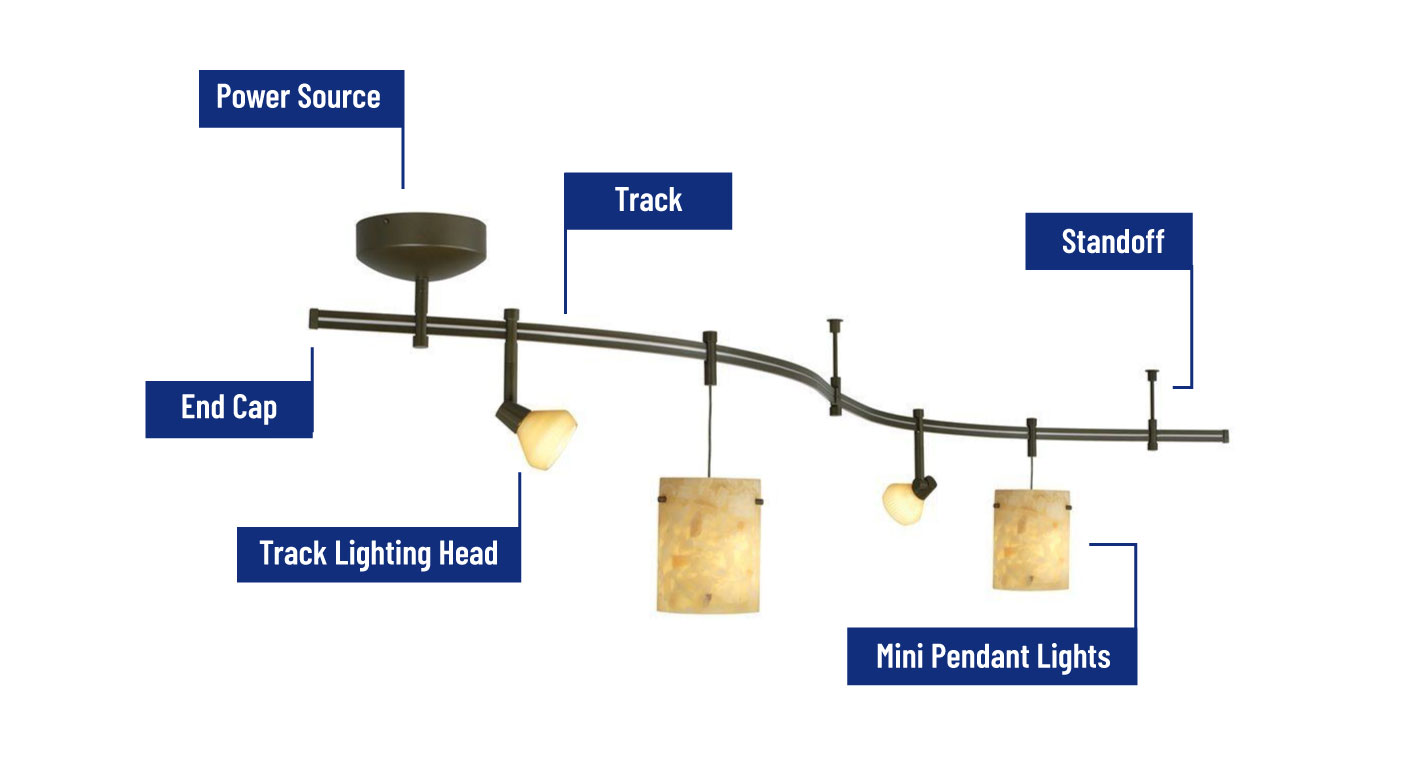
There are two main components of track lighting systems: the track, which supplies the power, and the track lighting fixtures (also referred to as elements), which supply the illumination.
The track houses multiple components that are used to provide power to the track lighting fixtures, including the transformer, power feed canopy, power extenders, connectors, standoffs, monorails, and endcaps. These individual pieces are available from canadalightingexperts to help you complete your installation. However, due to the various pieces needed to correctly install the track lighting system, we strongly recommend that those unaccustomed to the installation purchase a complete track lighting kit that will include everything you need to get your track lighting fixtures up and running in as little time as possible.
Due to the multi-piece nature of track lighting, it is possible to marry two or more track lighting systems together to achieve the length and shape of track lighting you want. Please consult a licensed electrician about complex lighting installations!
What types of track lighting systems are available?
There are several different kinds of track lighting systems available:
Standard Track: At its most basic, a standard track is a 120V line-voltage system that function as an extension of your home’s pre-existing electrical circuit, with 120 volts being the general standard voltage in private homes.
Monorail: Monorails are very similar in operation and style to standard track. However, they are usually low-voltage (12V) systems with their own transformers, separate from the main electrical circuit of your home.
Wall Monorail: As you may have guessed from the name, wall monorails are monorail track lighting systems that mount to the wall instead of the ceiling. There are many reasons why you may want to mount your track lighting fixtures to the wall instead of overhead, such as highlighting family portraits or other wall art.
Monorail Two-Circuit: The monorail two-circuit allows for more track lighting fixtures to be installed on your track and controlled separately through two different circuits. This is ideal for large spaces or spaces that require layers of lighting.
Standard Two-Circuit Track: Like their single-circuit counterparts, the standard two-circuit functions very similarly to the monorail two-circuit track lighting system, but is an extension of your home’s electrical circuit instead of running off its own low-voltage transformer.
PRO TIP:Two-circuit tracks are often used when installing different types of elements into your track lighting system. One circuit may feature close-to-ceiling fixtures and directional lights, while the other utilizes pendants. This creates a layered lighting effect that allows you better control over the atmosphere produced by your lighting fixtures. Use the circuits one at a time or together as you see fit to meet your lighting needs.
Cable System: These low-voltage lighting systems are one of the hottest trends in both home and professional lighting. Like monorail systems, cable systems are separate from your home’s electric circuit and run on their own power supply. They are extremely versatile and can adjust to a wide variety of spaces to make sure you get light exactly where you need and want it.
Free Jack System: These light fixtures are not actually affixed to a track! Using a pre-existing canopy, you can install a track lighting fixture (or element) directly into your ceiling. This is commonly used for pendant elements sans tracks or when converting canopies that were previously used for recessed lighting to hanging lights.
What are mounting options for track lighting?
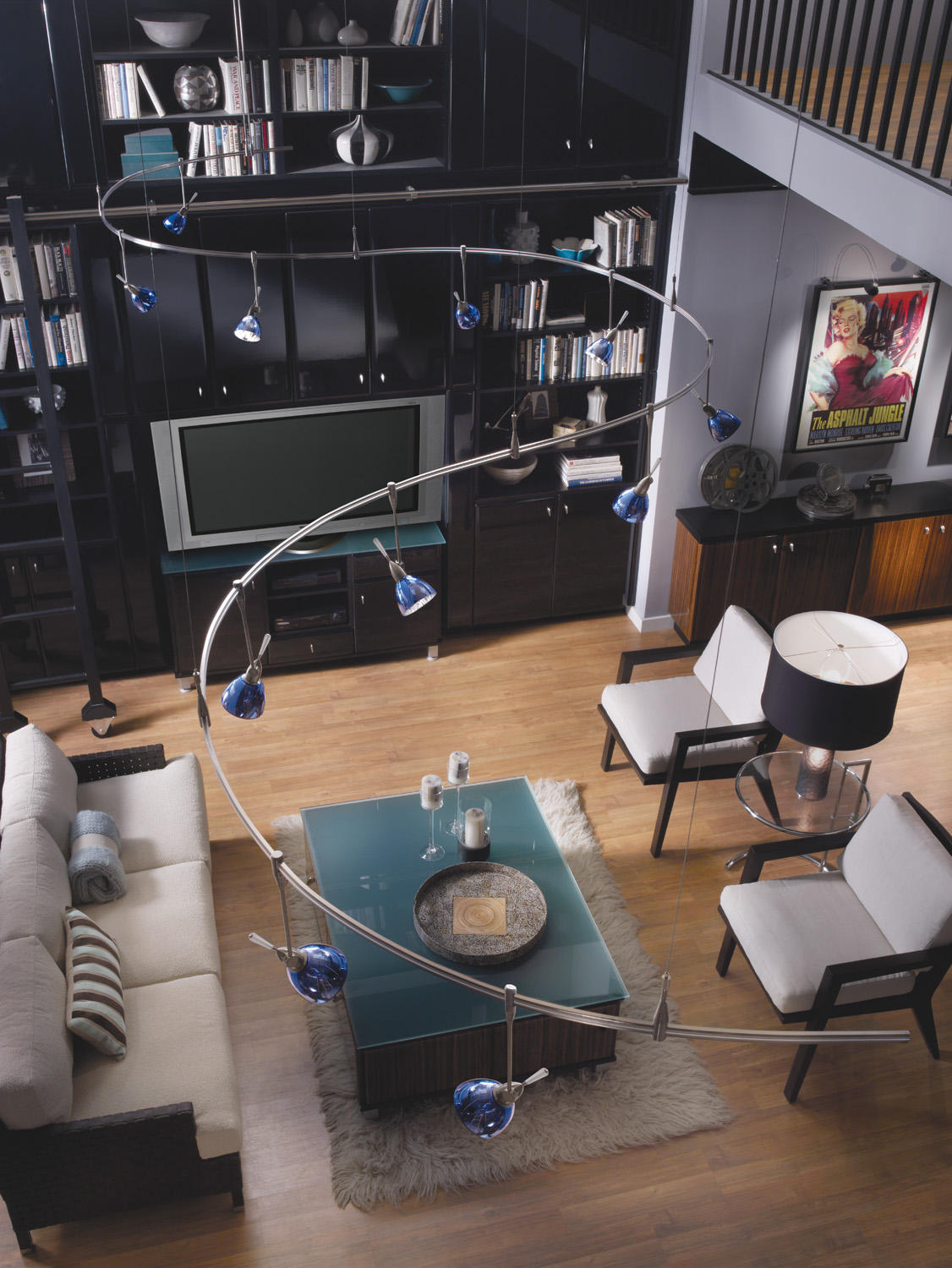
Track lighting systems can be mounted both to the ceiling and to the wall, depending on your needs. Generally, the ceiling is considered the primary placement for task lighting as the distance allows the light room to spread over a wider area, while wall lighting is more ideal for spotlighting certain features and accents of your home space like paintings, photographs, etc. However, in some spaces—such as work benches and desks—smartly placed wall lighting can provide excellent task lighting.
How much track lighting do I need?
How much track lighting you need will vary based on the application it is being used for. If your goal is to highlight specific features of your home, then you will want to arrange your track lighting fixtures where the light will best flatter those features. If your goal is to light an entire room, then the amount of track lights you need will vary based on the wattage of the individual lights, the size of the space, and how bright you want your space to be.
When it comes to spacing track lights, it is generally advised to place them 12” to 24” inches apart on the track. If you are placing track lighting for task lighting in a concentrated area, such as a work bench, you may want to place them closer than that. The absolute minimum space distance is 4” between fixtures, so you can crowd them closer together if needed for your specific usage (if the size of the element itself allows such spacing, of course). Otherwise, stick to a 12” minimum for spacing your track lights in a larger or non-task-specific space.
If you have further questions about how much track lighting you should plan on for your space, please give us a call and one of our lighting experts will be happy to discuss your options.
How do I create a track lighting design?
- What is the primary function of your track lighting system? Are you looking to cast a spotlight on a specific feature, add safety to your hallway where other fixtures are inconvenient, or establish multi-layered ambient lighting in your living room?
- What kind of track lighting system is best for your space? Think about whether you want your track lighting system to be wired directly into your home’s electric circuit or run from its own transformer, and what will be easiest for installation in your home. You may wish to consult a licensed electrician regarding the details of the different installation benefits associated with each type of track lighting system.
- What kind of track lighting fixtures will you install? Do you want high-function directional lights, stylish pendants, or something else? There’s a lot of variety in track lighting fixtures depending on what you want from your lighting system. Browse our selection of track lighting heads for inspiration.
- Map out your space. Now that you know what kind of track you’ll use and the kind of fixtures you will want to install to the track, it’s time to determine exactly where you’ll install the track lighting. Map out your space and determine where the best place to install the lighting will be to accomplish your lighting goal, being mindful of other fixtures, well-trafficked areas (if using hanging pendants), and natural light. Again, you may wish to consult with a licensed electrician in regards to the practicality of your chosen design to make sure you are getting both what you want and what will work for your home.